Swan Song 2023
Pigment print
42 x 29.7 cm
Pigment print
42 x 29.7 cm
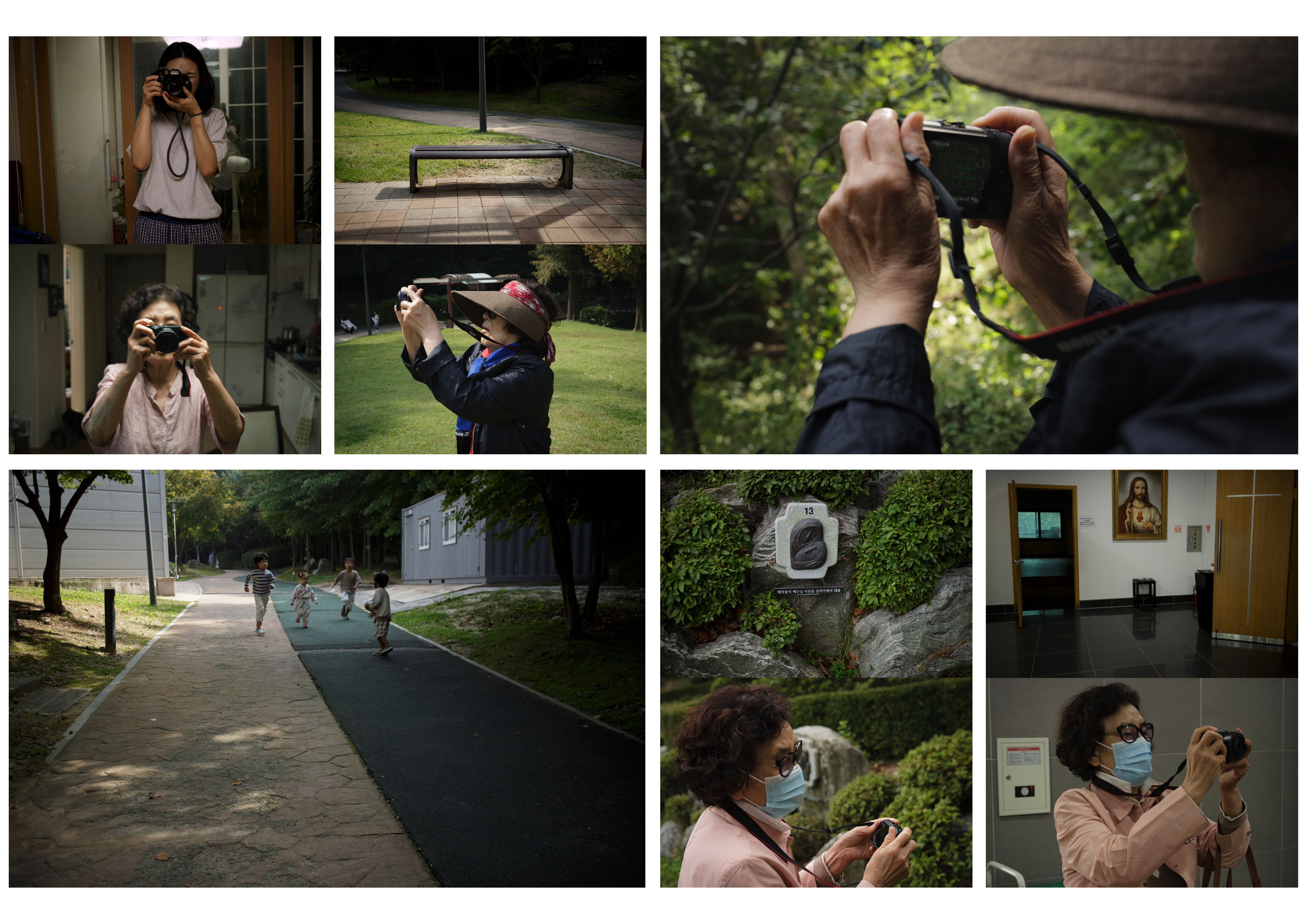
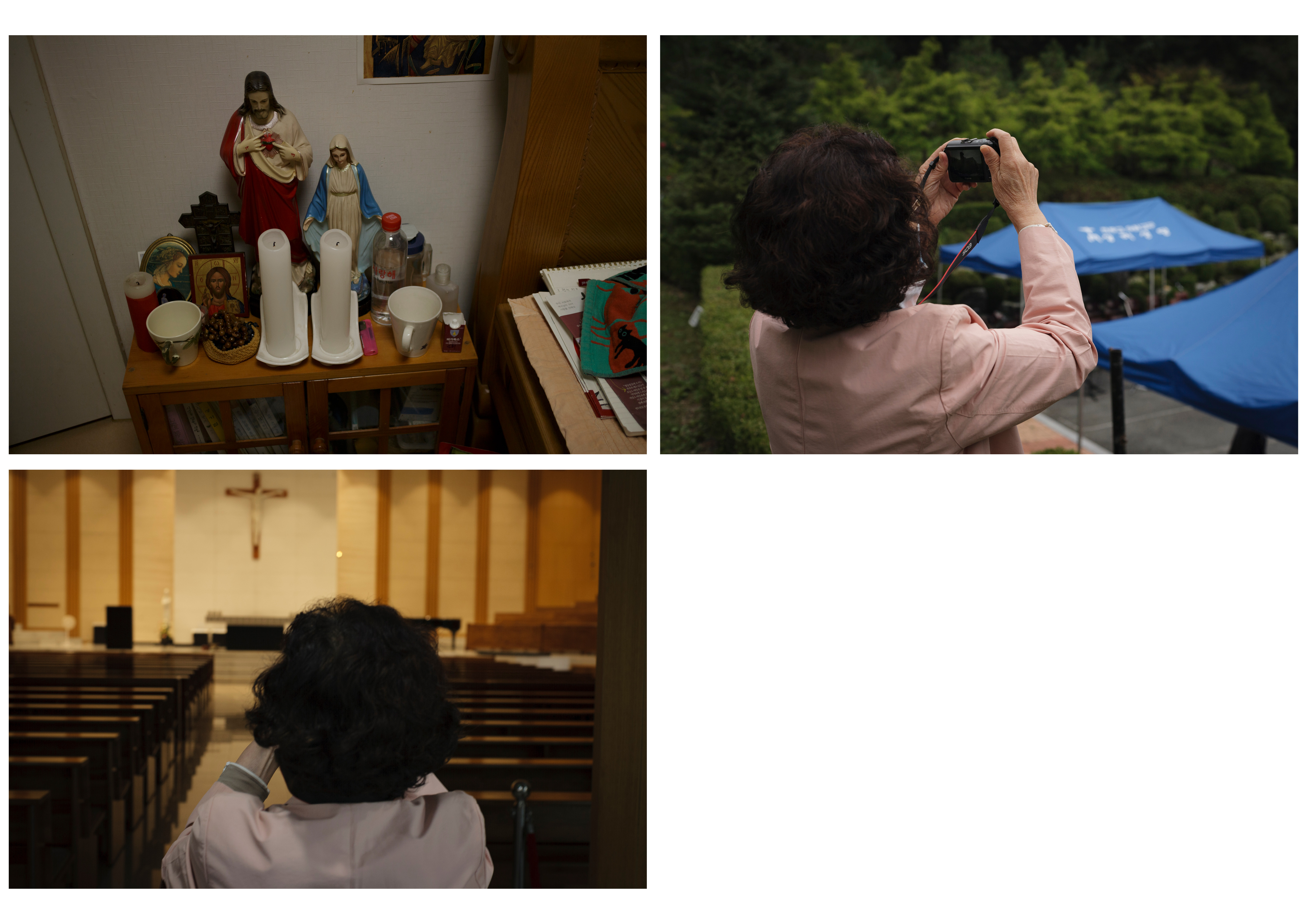
This project centers on an artistic collaboration with a Korean woman who was born during the Japanese colonial period (1910–1945) and survived not only the Korean War (1950–1953) but also a period of military dictatorship in South Korea (1961–1987). The artist’s grandmother, Lee Soon-shim, was born in 1942 on the small island of Namhae in southern South Korea. She was unable to complete her elementary education because she was female; however, throughout her life, she remained deeply interested in arts and crafts.
It should be noted that during this period, barriers to becoming an artist were gradually lowered due to technological developments, such as advances in photography. However, the distinction between hobby art and what is considered “genuine” art is often determined by institutional certification—namely, whether one has graduated from an art school. According to American art critic Dave Hickey, after the collapse of Japan’s bubble economy in 1995, the U.S. art market experienced economic stagnation, while conceptual art, structuralism, and postmodern art flourished. In other words, economic value was prioritized over beauty.
The intellectual Western male elite has largely determined artistic value and its influence on non-Western countries. In a capitalist society, every activity and product is regarded primarily in terms of monetary value, and without official certification, contemporary artworks are often considered to lack such value. Contemporary decorative paintings and sculptures are frequently criticized not only for an alleged lack of conceptual depth but also because they are created by artists who have not received formal art education. In this regard, this project critiques institutional systems of validation, certification in art education, and their impact on the art market and artistic practice.
This project was supported by the Austrian Ministry of Arts, Culture, the Civil Service, and Sport (BMKÖS).